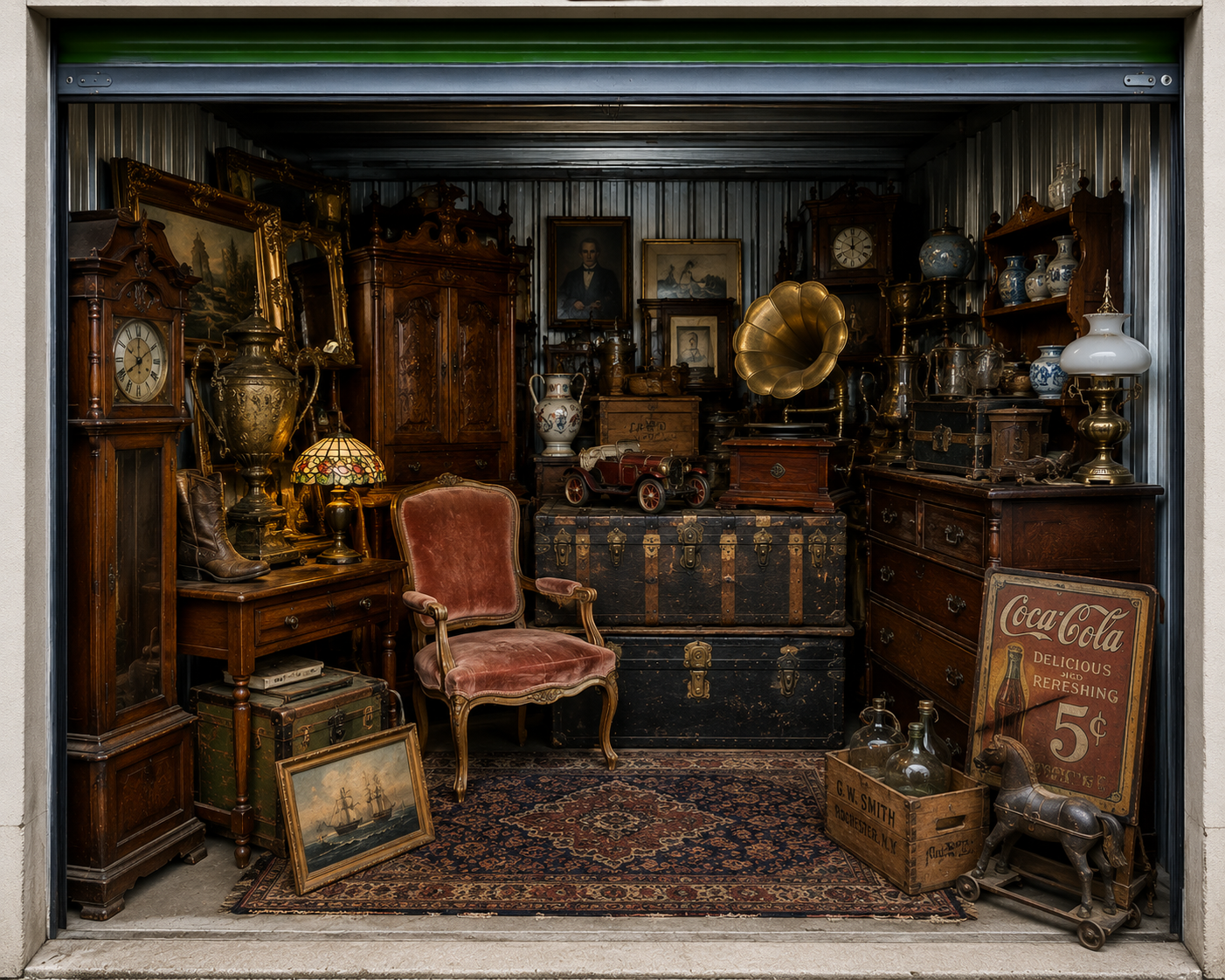
The importance of storing items correctly to preserve them for long term storage.
Family heirlooms carry more than sentimental value — a grandmother’s china cabinet, a great-grandfather’s writing desk, or a hand-stitched quilt passed down through generations. These pieces often can’t be replaced, which makes proper storage essential when you’re downsizing, renovating, between homes, or simply making room for new memories.
At Gator State Storage in Clearwater, Florida, located at 2166 Drew Street, we know Florida’s heat and humidity can be especially hard on delicate antiques and family treasures. Here’s how to protect your heirlooms so they’re in the same condition — or better — when you’re ready to bring them home again.
Why Antiques Need Special Care
Unlike everyday furniture or boxed belongings, antiques and heirlooms are often made from materials that react strongly to temperature swings, humidity, and light exposure:
• Wood furniture can warp, crack, or develop mold in humid conditions
• Fabric and textiles (quilts, linens, upholstery) are prone to mildew and fading
• Metal items like silver, brass, or jewelry can tarnish or corrode
• Paper goods — photographs, letters, books — are especially sensitive to moisture
• Fine china and glassware can crack under temperature extremes or improper handling
Florida’s climate, with its heat and humidity, makes these risks even more pronounced, which is why choosing the right storage solution matters just as much as how you pack.
Step 1: Clean Before You Store
Dust, oils, and residue can attract pests or accelerate deterioration over time.
• Dust wood furniture with a soft, dry cloth — avoid furniture polish before long-term storage, as some products can attract dust or leave residue.
• Gently wash fabric items if care labels allow, or have delicate textiles professionally cleaned beforehand.
• Polish metal pieces lightly, but avoid heavy polish buildup that can trap moisture.
• Handle paper items with clean, dry hands or cotton gloves to avoid oils transferring onto photos or documents.
Step 2: Use the Right Materials
What you wrap an heirloom in matters as much as where you store it.
• Acid-free tissue paper is ideal for wrapping photographs, books, and delicate textiles.
• Avoid regular plastic wrap or bags for wood and fabric — trapped moisture can lead to mold. Opt for breathable cotton sheets or blankets instead.
• Use sturdy, appropriately sized boxes for china and glassware, with generous padding between each piece.
• Original packaging, when available, is often the safest option for delicate collectibles.
Step 3: Disassemble and Support Furniture Properly
• Remove any detachable legs, shelves, or hardware from antique furniture to reduce strain on joints and hinges.
• Support tabletops and cabinet doors with padding to prevent warping over time.
• Never stack heavy items directly on top of antique furniture — use shelving or sturdy storage racks instead.
• Store mirrors and framed art vertically, never flat, to avoid pressure cracks.
Step 4: Choose Climate Controlled Storage
This is one of the most important decisions you’ll make when storing heirlooms. A climate controlled storage unit maintains consistent temperature and humidity levels, which helps prevent:
• Wood warping, cracking, or joint separation
• Mold and mildew growth on textiles and paper
• Tarnishing and corrosion on metal pieces
• Fading or brittleness in photographs and documents
For irreplaceable items, the modest additional cost of climate control is a small price to pay for long-term protection — especially in a coastal Florida climate like Clearwater’s.
Step 5: Organize for Protection, Not Just Space
When storing heirlooms alongside everyday belongings, keep antiques together in a clearly organized section of your unit rather than scattered throughout.
• Label boxes clearly, noting fragile contents.
• Keep an inventory list (with photos, if possible) for insurance purposes.
• Store heirlooms slightly elevated off the floor using shelving or pallets.
• Avoid placing antiques directly against exterior walls where temperature fluctuation can be greatest.
Step 6: Check In Periodically
Even in a climate controlled unit, it’s good practice to visit your storage unit every few months to:
• Inspect for any signs of moisture, pests, or damage
• Re-fold or reposition textiles to avoid permanent creasing
• Confirm boxes remain sealed and labeled
• Update your inventory list if you add or remove items
Protecting What Matters Most
Heirlooms and antiques hold stories that can’t be replaced, and the right storage approach makes all the difference in preserving them for the next generation. With proper cleaning, the right materials, careful furniture support, and a climate controlled environment, your family’s treasures can stay safe for years to come.
Store Your Heirlooms with Confidence in Clearwater
Gator State Storage, located at 2166 Drew Street, Clearwater, FL, offers climate controlled storage units designed to protect your most valuable and sentimental belongings from Florida’s heat and humidity. Our team is happy to help you find the right unit size and setup for your family’s heirlooms and antiques.
Contact Gator State Storage in Clearwater today to learn more about climate controlled storage options for your treasured belongings.
